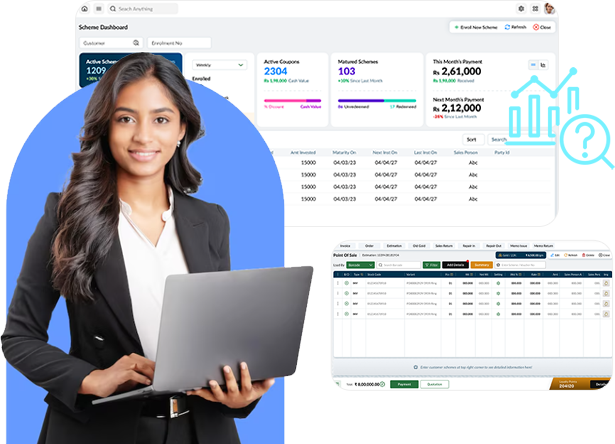

TLDR: Jewellery businesses in Abu Dhabi are under more operational pressure than ever in 2026, managing multi-metal inventory, karatage tracking, live gold rate integration, VAT compliance, and customer loyalty programs simultaneously. This guide covers what jewellery ERP software actually does, why Abu Dhabi retailers specifically need it, what features matter most, and how to choose the right solution for your shop size and structure.
The best jewellery ERP software in Abu Dhabi combines real-time gold rate integration, karatage and weight-based inventory tracking, VAT compliance built for UAE regulations, and multi-branch management into a single connected system. For Abu Dhabi jewellery retailers, the right ERP platform eliminates the manual reconciliation errors, stock discrepancies, and compliance gaps that cost shops significant money every year.
Abu Dhabi’s jewellery retail sector operates under a unique set of pressures that generic ERP systems simply were not built to handle. Gold prices fluctuate multiple times per day. Inventory is measured not just by piece count but by metal type, purity, weight, and karatage. VAT compliance in the UAE requires precise transaction-level documentation. Customer relationships in high-value retail depend on detailed purchase histories, loyalty tracking, and personalized service that a standard point-of-sale system cannot support adequately.
The jewellery businesses in Abu Dhabi that are growing fastest in 2026 are not necessarily the ones with the largest budgets or the most prominent locations. They are the ones that have invested in purpose-built ERP systems that handle the complexity of jewellery retail natively, without expensive customization workarounds or manual data entry that introduces errors at scale. If you are running a single boutique in Abu Dhabi or managing a multi-branch operation across the UAE, the case for a dedicated jewellery ERP has never been stronger or more straightforward to build.
What Is Jewellery ERP Software and Why Does Abu Dhabi Need It Specifically
Jewellery ERP software is an enterprise resource planning system designed specifically for the operational realities of jewellery retail and manufacturing. Unlike generic ERP platforms that treat inventory as simple stock-keeping units, jewellery ERP systems track inventory by metal type, purity level, weight, stone specifications, making charges, and real-time market valuation simultaneously.
Abu Dhabi has specific requirements that make generic solutions inadequate. UAE VAT regulations require precise documentation at the transaction level, with different treatments for gold bullion versus jewellery pieces. The Abu Dhabi gold market operates on live international price feeds that need to be integrated directly into point-of-sale calculations. Multi-currency transactions are common given the city’s international customer base. And many larger retailers operate across multiple Emirates, requiring centralized inventory visibility across branches that may carry different stock profiles.
A purpose-built jewellery software platform handles all of these requirements within a single system architecture rather than requiring separate software for inventory, accounting, compliance, and customer management that must be manually reconciled at the end of each trading day.
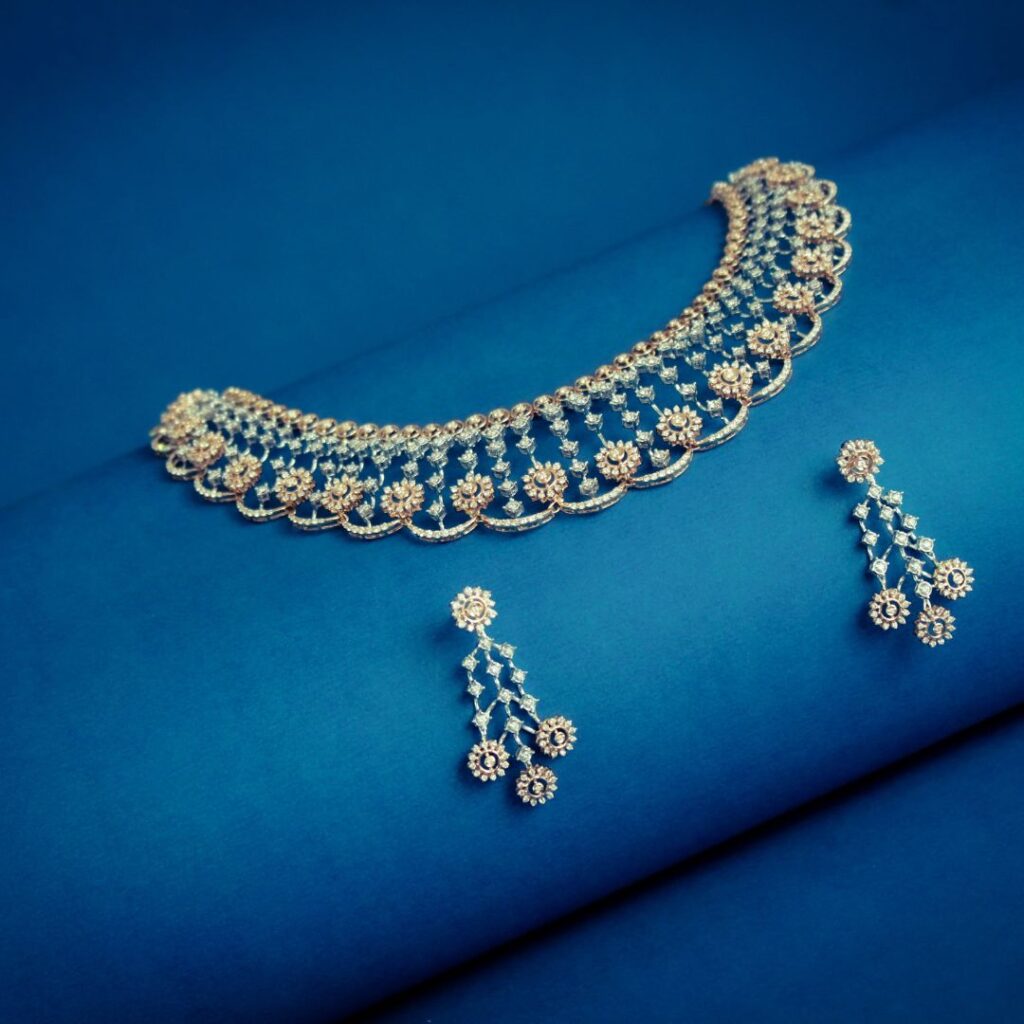
Key Features That Jewellery ERP Software Must Have in Abu Dhabi 2026
Before evaluating any specific platform, it is worth establishing clearly what features a jewellery ERP system must include to be genuinely useful for an Abu Dhabi retailer in 2026. Not every platform that markets itself as jewellery software actually delivers on all of these dimensions.
Real-Time Gold Rate Integration
The foundation of any jewellery ERP system in the UAE is live gold rate integration. Your system should pull current gold prices automatically from recognized market feeds and apply them instantly to sales calculations, inventory valuations, and purchase orders. Manual gold rate entry introduces both error risk and competitive disadvantage when prices move intraday.
Weight and Karatage Based Inventory
Jewellery inventory cannot be managed the same way a clothing retailer manages sizes and colors. Your ERP needs to track each piece or batch by metal purity (18K, 22K, 24K), weight in grams, stone type and carat weight where applicable, making charges, and overall piece valuation at current market rates. Without this granularity, your stock reports are unreliable and your gross margin calculations are approximate at best.
UAE VAT Compliance Built In
UAE VAT regulations treat different jewellery categories differently, and the documentation requirements for tax filing are specific. Your ERP should generate VAT-compliant invoices automatically, maintain the transaction records required for filing, and produce the reports your accountant needs without manual extraction and reformatting.
Multi-Branch Centralized Management
For any retailer operating more than one location, centralized visibility is essential. You need to see stock levels, sales performance, and cash positions across all branches from a single dashboard, with the ability to transfer stock between locations and track inter-branch transactions cleanly.
Customer Relationship and Loyalty Management
High-value jewellery retail runs on relationships. Your ERP should maintain detailed customer purchase histories, support loyalty point accumulation and redemption, flag purchase anniversaries and birthdays for proactive outreach, and give your sales team the context they need to deliver personalized service to returning customers.
Repair and Custom Order Tracking
Many Abu Dhabi jewellery shops handle repair work and custom fabrication alongside retail sales. Your ERP should track repair jobs from receipt through completion, manage customer expectations with status updates, and handle the billing complexity of repair services alongside standard retail transactions.
Jewellery ERP Software Options in Abu Dhabi: What to Look For in 2026
The market for jewellery-specific ERP software has matured significantly. Several platforms now offer configurations specifically built for UAE and GCC market requirements. Here is what distinguishes the leading options.
Purpose-Built vs. Adapted Generic ERP
The most important distinction when evaluating platforms is whether the system was built specifically for jewellery retail from the ground up or whether it is a generic ERP that has been customized for jewellery use cases. Purpose-built systems handle the complexity of jewellery-specific inventory and pricing natively, which means faster implementation, fewer workarounds, and more reliable performance over time.
Generic ERP platforms like SAP Business One or Microsoft Dynamics can be configured for jewellery retail, but the customization cost is substantial, the implementation timeline is long, and ongoing maintenance of custom modules creates technical debt that grows as your business evolves.
Cloud vs. On-Premise Deployment
In 2026, cloud-based deployment is the preferred option for most Abu Dhabi jewellery retailers, particularly those operating multiple branches. Cloud systems provide real-time synchronization across locations, automatic software updates that include regulatory compliance changes, and accessibility from any device, which is valuable for owners who need visibility into operations while travelling or managing across sites.
On-premise deployment may still be preferred by very large operations with specific data sovereignty requirements or retailers who have existing IT infrastructure they want to leverage. The trade-off is higher upfront hardware cost and the need for internal IT support to manage updates and maintenance.
Integration with Accounting and Banking Systems
Your jewellery ERP should integrate cleanly with your accounting software and banking systems. UAE-specific accounting integrations, particularly for VAT filing and financial reporting, are essential. Platforms that require manual export and import of financial data between systems create reconciliation work and introduce error risk that defeats the purpose of having an integrated ERP in the first place.

Synergics Solutions: A Purpose-Built Option for UAE Jewellery Retailers
Synergics Solutions has built a strong reputation in the UAE jewellery retail sector specifically because their platform was designed for the GCC market from the beginning rather than adapted from a generic retail ERP. Their jewellery ERP suite includes real-time gold rate integration, weight and karatage based inventory management, UAE VAT compliance, and multi-branch management within a unified system.
For Abu Dhabi retailers evaluating options, the regional focus matters practically. A platform built for the UAE market understands local regulatory requirements, Arabic language interface needs, and the specific operational flows of Middle Eastern jewellery retail without needing expensive regional customization on top of a Western-market base product.
Their platform is used by retailers ranging from single boutiques to multi-branch operations across the Emirates, which means the system has been tested and refined against the actual operational complexity of UAE jewellery retail at different scales. For businesses in Dubai looking at comparable solutions, jewelry software dubai from Synergics covers the same feature set with configurations specific to the Dubai market’s regulatory and operational environment.
How to Evaluate Jewellery ERP Software for Your Abu Dhabi Shop
The evaluation process for jewellery ERP software should be structured and methodical rather than driven primarily by vendor presentations and feature lists. Here is a practical framework for making the right decision.
Step 1: Map Your Current Operational Pain Points
Before speaking to any vendor, document exactly where your current system or manual process is breaking down. Is it inventory reconciliation at month end? VAT filing preparation? Stock visibility across branches? Customer purchase history access at the point of sale? Your pain points should drive your feature requirements, not the other way around.
Step 2: Define Your Non-Negotiable Requirements
Based on your pain point mapping, identify the three to five features that any solution must include to be worth evaluating further. For most Abu Dhabi retailers, these will include live gold rate integration, UAE VAT compliance, and weight-based inventory tracking as absolute minimums.
Step 3: Request a Live Demo with Your Own Data
Any credible jewellery ERP vendor should be willing to demonstrate their platform using scenarios and data structures that reflect your actual business. A generic demo with placeholder data tells you very little about how the system will perform with your specific product mix, branch structure, and transaction volume.
Step 4: Check References from UAE-Based Retailers
Ask specifically for references from other jewellery retailers in the UAE, ideally in Abu Dhabi or Dubai, who have been using the platform for at least 12 months. Ask those references specifically about implementation experience, ongoing support quality, and whether the system has handled regulatory changes, particularly VAT updates, without requiring significant manual intervention.
Step 5: Evaluate Total Cost of Ownership Over Three Years
License or subscription fees are only part of the cost equation. Implementation costs, training costs, ongoing support fees, and the cost of any required customization should all be factored into your comparison. A lower license fee with high implementation and customization costs can easily be more expensive over three years than a higher license fee with a streamlined implementation.
Jewellery Inventory ERP in Abu Dhabi: Solving the Stock Management Challenge
Inventory management is where jewellery retail ERP delivers its most immediate and measurable return on investment. The stock discrepancies that accumulate in manual or generic systems, pieces recorded at incorrect weights, karatage mismatches, untracked repairs returned to stock, represent real financial losses that a purpose-built system eliminates.
A well-implemented jewellery inventory ERP system should give you accurate stock valuation at current gold rates at any moment, complete traceability of every piece from purchase through sale or transfer, automatic reorder alerts when specific categories fall below defined thresholds, and clean audit trails that support both internal controls and external audits.
For Abu Dhabi retailers managing high-value inventory across multiple display cases and vault storage, RFID integration is becoming an increasingly attractive addition to ERP systems in 2026. RFID-enabled inventory counting reduces the time and labor required for stock audits from days to hours and eliminates the transcription errors that manual counting introduces.
The retail Jewellery Software platforms that are gaining the most ground in Abu Dhabi in 2026 are those that combine robust inventory management with genuinely usable point-of-sale interfaces, because the best back-office system in the world creates friction rather than value if your sales team finds it difficult to use during customer interactions.
Frequently Asked Questions
What is jewellery ERP software and how is it different from regular retail software? Jewellery ERP software is specifically designed for the operational complexity of jewellery retail, including weight and karatage based inventory tracking, real-time gold rate integration, stone specification management, repair job tracking, and UAE VAT compliance. Regular retail software manages inventory as simple stock-keeping units without the metal-specific valuation and purity tracking that jewellery retail requires.
Is cloud-based jewellery ERP suitable for Abu Dhabi retailers? Yes. Cloud-based jewellery ERP is suitable and increasingly preferred for Abu Dhabi retailers in 2026, particularly those with multiple branches. Cloud deployment provides real-time stock visibility across locations, automatic compliance updates, and accessibility from any device without the hardware investment and IT maintenance burden of on-premise systems.
How long does jewellery ERP implementation typically take for an Abu Dhabi shop? Implementation timelines vary by shop size and complexity. A single-branch boutique can typically go live within four to eight weeks with proper data preparation and staff training. Multi-branch operations with complex inventory structures and existing data migration requirements typically require three to six months for a complete implementation.
Does jewellery ERP software handle UAE VAT compliance automatically? Purpose-built jewellery ERP systems for the UAE market include UAE VAT compliance as a core feature, generating compliant invoices automatically and maintaining the transaction records required for VAT filing. Generic ERP systems may require custom configuration to handle UAE VAT correctly, which adds implementation cost and ongoing maintenance risk when regulations change.
What is the typical return on investment for jewellery ERP software in Abu Dhabi? Most Abu Dhabi jewellery retailers report measurable ROI within 12 to 18 months of implementation, driven primarily by reductions in inventory discrepancies, faster stock audit processes, elimination of manual VAT preparation work, and improved sales team productivity through better customer data access at the point of sale. High-volume retailers with significant manual reconciliation workloads typically see faster payback periods.
Can jewellery ERP software integrate with existing accounting software? Leading jewellery ERP platforms include integrations with common accounting software used in the UAE market. It is important to verify specific integration compatibility during your evaluation process and to understand whether the integration is native or requires a third-party connector, as this affects both reliability and ongoing maintenance cost.