TLDR: Most jewellery businesses manage manufacturing and retail as two separate worlds connected by manual handoffs, paper records, and trust rather than systems. This disconnect creates cost leakage, production delays, stock mismatches, and customer experience gaps that compound quietly over time. An end-to-end jewellery ERP from Synergics Solution Pvt Ltd connects every stage from raw material procurement through to showroom billing in a single integrated platform, eliminating the gaps where value disappears.
The jewellery industry operates across one of the most complex supply chains in any consumer product category. A finished piece on a showroom display case has passed through raw material sourcing, alloy preparation, design, wax modelling or hand fabrication, stone setting, quality checking, hallmarking, photography, and inventory tagging before a customer ever sees it. In most jewellery businesses, each of these stages is managed with a different tool, a different register, or a different person’s memory. The result is a business where information lives in silos, errors accumulate at every handoff point, and management decisions are made based on whatever can be assembled from these disconnected sources on any given day.
The businesses changing this in 2026 are the ones that have moved to a fully integrated platform that tracks every stage from the manufacturing floor to the retail counter within a single system. Proper jewellery software from Synergics Solution Pvt Ltd through their SEA ERP suite is purpose-built for exactly this kind of end-to-end visibility, connecting procurement, production, quality control, inventory, and retail billing so that information flows through the business rather than pooling in disconnected pockets.
Why End-to-End Integration Matters More in 2026 Than It Did Five Years Ago
Customer expectations in the jewellery market have shifted. Buyers in 2026 expect transparency, personalisation, and speed that jewellery businesses running disconnected systems genuinely struggle to deliver. A customer asking for a custom piece wants realistic production timelines, not estimates based on a production manager’s gut feel. A showroom staff member showing a customer a piece should be able to confirm its metal composition, stone details, and making charges instantly rather than disappearing to the back office to find the paperwork. An owner reviewing business performance should see margin by product category, production cost versus selling price, and branch-level profitability in one report rather than across five spreadsheets. None of this is possible without integration across the full operational chain.
Top 7 Stages Where End-to-End Jewellery ERP Creates the Most Value
1. Raw Material Procurement and Inventory
Every jewellery piece begins with raw material, and raw material management is where cost control either starts well or starts poorly. Gold, silver, platinum, and gemstone procurement involves live market pricing, supplier relationships, quality assessment, and accurate weight recording at every point of receipt. When procurement is managed separately from production and retail, discrepancies in material weights, supplier invoice reconciliation errors, and stock valuation inaccuracies accumulate without anyone catching them until a physical audit reveals the damage.
An integrated ERP connects procurement directly to production planning and inventory. Material received from a supplier updates the raw material stock in real time with the correct weight, purity, and cost basis. Production orders draw from this stock with full traceability. The system maintains a live valuation of all raw material holdings at current market rates, giving management an accurate picture of their material asset position at any moment rather than at the end of a manual reconciliation process.
2. Design and Order Management
Custom orders and design management are among the most information-intensive processes in jewellery manufacturing. A customer commission involves design specifications, material requirements, production instructions for the karigar, stone sourcing if required, timeline commitments, and pricing that must account for all of these inputs accurately. Managing this across email threads, written notes, and verbal agreements creates both operational risk and customer experience risk when details are misunderstood or forgotten.
An integrated order management module captures every custom order specification in a structured format that travels with the order through every production stage. The design brief, material allocation, karigar assignment, milestone dates, and customer communication history are all attached to a single order record that any authorised team member can access. When a customer calls to ask about progress on their commission, the showroom staff can answer immediately rather than tracking down the production manager.
3. Manufacturing and Production Floor Management
The production floor in a jewellery manufacturing operation involves multiple simultaneous jobs at different completion stages, materials moving between departments, and quality decisions being made at each stage. Without a system tracking all of this, production managers rely on experience and proximity to know what is happening. When volume increases or when the manager is unavailable, visibility collapses.
A production management module within an end-to-end ERP tracks every job from initiation to completion. Material issues from the raw material store to specific production jobs are recorded with weights and specifications. Stage completions are logged as work progresses through casting, filing, setting, and polishing departments. Quality check outcomes are recorded against each job. The system maintains a live view of work in progress that management can monitor remotely rather than by walking the floor.
4. Karigar and Job Work Accountability
External karigar relationships represent one of the highest-value and highest-risk operational areas in the jewellery manufacturing chain. Materials of significant value leave the business for external fabrication, repair, or finishing and return at different weights, in different conditions, and on timelines that are not always as agreed. The accountability systems most businesses have in place for this process are inadequate relative to the value at risk.
Retail jewellery software from Synergics Solution Pvt Ltd includes dedicated karigar management that creates a formal digital record for every job work transaction. Material issue weights, expected return weights, agreed timelines, and actual return weights are all recorded in the system. Variances beyond acceptable tolerances trigger alerts. The complete history of every karigar relationship is maintained in a searchable format that supports performance assessment, dispute resolution, and financial reconciliation with confidence.
5. Quality Control and Hallmarking
Quality control in jewellery manufacturing is not a single gate but a series of checks at different production stages. A piece that passes the initial casting check may reveal issues at the setting stage. A finished piece may show surface defects during final inspection. Hallmarking requires verified metal composition and weight records that connect back to the production history. Managing these quality processes through paper records creates documentation gaps that become compliance and customer service problems later.
An integrated quality management module records the outcome of every quality check against the specific piece it relates to. Rejection reasons are categorised for analysis, feeding improvement insights back to the production planning process. Hallmarking records are maintained in the system with the weight and purity data that connects back to the original material procurement record. When a customer questions the metal composition of a piece they purchased, the documentation trail exists and is retrievable within seconds.
6. Inventory Tagging and Stock Management Across Locations
The transition from finished production to retail inventory is the handoff point where many jewellery businesses lose control of their stock picture. Pieces are tagged, photographed, and moved to showroom displays, but the connection between the production record and the retail inventory record is maintained by a manual entry process that introduces both errors and delays. When the same pieces need to move between showroom locations, the tracking complexity multiplies.
RFID and barcode-based tagging integrated with the ERP system creates a digital identity for every piece at the point of production completion. This tag travels with the piece through every subsequent movement, from quality check through to showroom display to sales transaction or inter-branch transfer. The retail inventory picture is always current because every movement updates the system in real time rather than waiting for a staff member to update a register.
7. Retail Billing and Customer Management
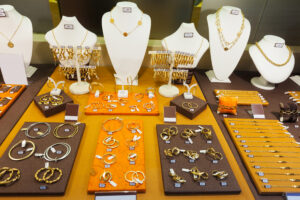
The final stage of the jewellery value chain is the retail transaction, and this is where all of the upstream data created through the manufacturing process pays dividends at the customer interaction level. A sales staff member using an ERP-integrated billing system can instantly access the complete details of any piece on the showroom floor, including its metal type and weight, stone specifications, making charges, production cost basis, and current selling price calculated against the live metal rate.
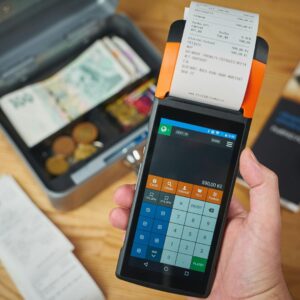
This depth of product knowledge at the point of sale creates a fundamentally different customer experience. Staff can answer detailed questions confidently, calculate accurate prices for variations, and process GST-compliant invoices without manual calculation or reference to separate documents. Customer purchase records are created at the point of billing and immediately available for relationship management, loyalty programme management, and future personalised communication.
How SEA ERP From Synergics Solution Pvt Ltd Connects Every Stage
The SEA ERP platform is designed around the specific workflow of jewellery businesses that span both manufacturing and retail operations. Unlike generic ERP systems that require extensive customisation to handle jewellery-specific processes, SEA ERP is built with jewellery industry requirements as its foundation. Live metal rate integration, karigar management, hallmarking records, stone weight tracking, and multi-branch inventory are all native features rather than add-ons.
Synergics Solution Pvt Ltd brings implementation experience across jewellery businesses of different sizes and structures, from vertically integrated manufacturers who own their retail showrooms to retailers who manage job work relationships with external production partners. This experience means their implementation guidance reflects how jewellery businesses actually operate rather than how a generic software implementation methodology assumes they do.
The result of a successful SEA ERP implementation is a business where information flows from procurement through to retail without manual handoffs, where management decisions are based on accurate real-time data rather than assembled approximations, and where the operational gaps that currently absorb cost and time are closed by the system rather than managed around by experienced staff.
End-to-End ERP vs Disconnected Systems: What Changes Across the Business
| Operational Stage | Disconnected Systems | End-to-End ERP |
|---|---|---|
| Raw material procurement | Manual weight recording, spreadsheet valuation | Real-time stock update, live market valuation |
| Custom order management | Paper specifications, verbal timelines | Digital order record, stage tracking |
| Production floor tracking | Manager proximity and memory | Live work-in-progress dashboard |
| Karigar accountability | Paper slips, verbal agreements | Digital issue and receipt records with alerts |
| Quality control | Paper check sheets | Stage-specific digital records with analysis |
| Inventory tagging | Manual entry, delayed updates | RFID-integrated real-time tracking |
| Retail billing | Separate system, manual rate entry | Integrated billing with live rate feed |
| Management reporting | Manual assembly across sources | Real-time consolidated reporting |
FAQs
Can an end-to-end jewellery ERP handle both in-house manufacturing and external job work within the same system? Yes. The SEA ERP platform from Synergics Solution Pvt Ltd manages both in-house production workflows and external karigar job work within the same integrated system. Internal production jobs and external job work orders are tracked through separate but connected modules, giving management a complete picture of all work in progress regardless of whether it is happening on-site or with an external production partner.
How does the ERP maintain accurate metal valuations when gold and silver rates change throughout the day? The SEA ERP system integrates with live metal rate feeds that update automatically throughout the trading day. Raw material stock valuations, work-in-progress valuations, and retail billing calculations all use the current live rate at the moment of the relevant transaction rather than a fixed or manually updated rate. This ensures that financial records, billing, and inventory valuations reflect actual market conditions consistently.
Is it possible to implement an end-to-end ERP in stages, starting with retail and adding manufacturing modules later? Yes. Synergics Solution Pvt Ltd supports phased implementation approaches where businesses begin with the retail and inventory modules that deliver the most immediate operational benefit and add manufacturing management modules as the team’s familiarity with the platform grows. The phased approach reduces the implementation burden on the business while still delivering a path toward full end-to-end integration.
How does the system handle hallmarking compliance documentation? The SEA ERP platform maintains hallmarking records as part of the quality and production management module. Metal composition and weight data from the production record is linked to the hallmarking outcome for each piece, creating a complete compliance documentation trail that can be retrieved at any point. This documentation supports both regulatory compliance and customer queries about piece specifications after purchase.
What is the minimum business size or transaction volume that benefits from an end-to-end jewellery ERP? Any jewellery business that manages both production and retail, regardless of volume, benefits from integration between these two functions. The absolute minimum threshold where the investment makes clear operational and financial sense is typically a business processing more than 30 to 50 production jobs per month alongside active retail billing. Below this threshold, simpler retail-focused systems may be more appropriate, though the production management capabilities become increasingly valuable as volume grows.
How long does staff training typically take before the team is confident using the full ERP system? For a business implementing the full end-to-end platform, Synergics Solution Pvt Ltd typically structures training across two to four weeks, with different staff groups receiving role-specific training rather than everyone being trained on every module simultaneously. Production staff, quality control personnel, karigar coordinators, retail billing staff, and management each have focused training relevant to their specific system use, which reduces the learning load and accelerates confidence at each functional level.
The jewellery businesses that will lead their markets in the coming years are the ones building operational infrastructure that matches the ambition of their growth plans. Manual handoffs between manufacturing and retail, disconnected systems at every stage of the value chain, and management decisions made on incomplete information are not sustainable foundations for the kind of scale that the most ambitious jewellery businesses are pursuing. Connecting every stage from raw material procurement through to showroom billing through a single integrated platform is not a technology decision. It is a strategic one that shapes every other operational and commercial decision the business makes afterward. Exploring what purpose-built jewellery erp software from Synergics Solution Pvt Ltd looks like for your specific manufacturing and retail structure is the natural first step toward building a jewellery business that operates with the precision and visibility that genuine growth requires.