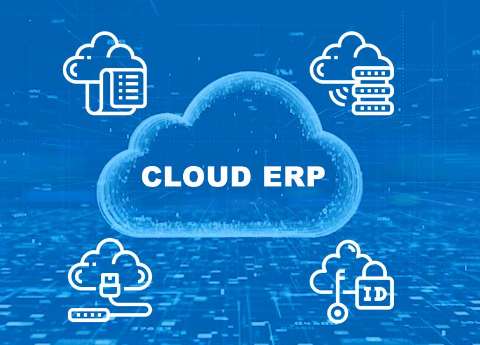
- Cloud ERP unifies inventory, manufacturing, retail, and finance in one system, accessible from anywhere.
- Key benefits include real-time visibility, lower IT overhead, stronger security, and faster implementation than on-premise systems.
- A genuinely jewellery-specific cloud ERP includes lot traceability, job work scheduling, and multi-currency finance out of the box.
- Synergics Jewellery ERP runs on Oracle and AWS, holds SOC 2 Type II certification, and serves 150+ businesses across 9 countries.
- Rolling out cloud ERP well means piloting first, migrating clean data, and training for real adoption, not just installation.
Why the Jewellery Industry Needs Cloud ERP

Jewellery businesses deal with a level of complexity most retail categories don’t. Inventory varies by metal type, gemstone, size, and style, not just a single SKU. Precious materials need end-to-end traceability across a high-value supply chain. Customers expect synchronized stock across retail, online, custom orders, and repair services. Made-to-order pieces generate their own workflow, from design through delivery. And regulatory documentation for hallmarking, sourcing, and tax categories adds another layer on top of all of it.
Standalone systems can’t hold all of this together. They create data silos, and those silos cause real inefficiency. Cloud ERP unifies finance, manufacturing, procurement, inventory, CRM, and reporting into one connected system instead.
Key Advantages of Cloud Jewellery Software
1. Real-time visibility across operations
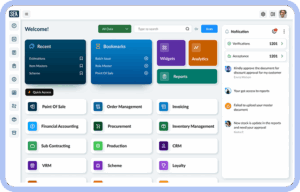
Live dashboards show stock levels across every workshop and store, the status of work-in-progress on custom orders, and current cash flow and margins, all without waiting for someone to compile a report.
2. Reduced IT overhead and easier scaling
There’s no on-premise server to buy or maintain. Adding a new store, product line, or market takes configuration, not new infrastructure. Updates and backups happen automatically through the provider.
3. Stronger data security and compliance
Enterprise-grade encryption and role-based access protect sensitive data by default. Traceability features mean every diamond or gold piece carries a documented history, ready for an audit.
4. Integrated mobile and remote access
Field sales staff can process orders or quote gold valuations on the go. Travelling reps and repair managers stay connected without needing to be in the store.
5. Faster implementation at lower cost
SaaS pricing reduces upfront capital spend in favor of predictable monthly costs. Templated jewellery workflows mean faster deployment than a custom-built system.
6. A better customer experience
Centralized CRM tracks repairs, warranties, and customer preferences in one place. Regular customers get notified automatically when matching stock arrives or when an anniversary approaches. Stock availability stays consistent whether a customer shops in-store or online.
What a Jewellery-Specific Cloud ERP Actually Includes
A cloud ERP built specifically for jewellery ships with modules a generic system simply doesn’t have.
|
Module |
What It Covers |
|
Inventory and Lot Control |
Metal consumption calculations, batch-level stone traceability, automated reorder alerts |
|
Manufacturing and Workshop Management |
Job work scheduling, barcode-based material requisition, scrap and yield reporting |
|
Order Management and Custom Jobs |
Customer quotes with previews, instant costing, structured workflow from quotation to delivery |
|
Retail POS Integration |
Live stock updates at checkout, unified handling of returns and repair bookings |
|
Finance and Costing |
Standard and weighted-average costing, multi-currency support, margin analysis tied to metal price moves |
|
CRM and Loyalty |
Purchase-based loyalty tiers, captured gemstone preferences, automated occasion-based promotions |
|
Procurement and Supplier Management |
Preferred vendor pricing, incoming quality checks, supplier performance tracking |
|
Analytics and Reporting |
Executive dashboards for WIP time and turnover ratio, audit trails, exportable compliance reports |
Choosing the Right Cloud ERP
A handful of criteria separate a genuinely capable cloud ERP from a generic one adapted for jewellery. Look for industry-ready workflows covering design, costing, and repairs. Confirm multi-channel retail features that keep e-commerce and in-store inventory synced. Check for lot and batch traceability strong enough to support hallmarking and audits. Mobile access with offline support matters for design studios and field teams working outside a strong signal.
Scalability across currencies and tax regimes matters if you’re growing internationally, and SLA-backed uptime with real encryption isn’t optional for a system holding this much sensitive data. Vendor experience specifically in jewellery deployments counts for more than general ERP experience, and open APIs matter for whatever tool you’ll want to connect next. Finally, look for clear, transparent pricing, not a subscription fee that hides a dozen mandatory add-ons.
If you’re comparing specific providers against these criteria, our comparison of the top jewellery ERP software in India covers eleven options in detail.
Why Synergics for Cloud Jewellery ERP
Synergics Jewellery ERP runs fully on Oracle and AWS infrastructure, built specifically for the jewellery trade rather than adapted from generic retail software. The company serves 150+ businesses across 9 countries, including CaratLane, Angara, Muthoot Exim, Browns, and Hazoorilal, and has logged over 32,85,000 man-hours supporting jewellery operations.
Synergics holds SOC 2 Type II certification and a CARE SME 3 rating, and the Economic Times and Business Today have both covered the company’s work in the space. That combination, real infrastructure, real certifications, and a genuine jewellery-specific client base, is what separates a cloud ERP built for this industry from one that’s simply hosted online.
Synergics also exhibited at IIJS Bharat Premiere 2026, GJEPC’s flagship gem and jewellery trade show, at Stall AU020G, Bombay Exhibition Centre (NESCO), Goregaon, from 6 to 10 August. Showing up at the industry’s largest B2B platform, alongside 2,100-plus exhibitors, reflects the kind of direct engagement with jewellers that shapes how the platform actually gets built.
Best Practices for Implementation

Rolling out cloud ERP well takes a plan, not just a purchase. Start by assembling a cross-functional team spanning production, inventory, finance, store management, and IT. Define clear KPI targets before you begin, so you know what “successful” actually looks like. Pilot the system in one outlet or production line first, rather than switching your whole business over at once.
Migrate clean data from the start, consolidating SKU codes, bills of materials, pricing, and customer records rather than carrying over old inconsistencies. Train your team for genuine adoption with role-specific guidance, not a single onboarding session. Once live, measure baseline performance against post-launch numbers, tracking cycle times, stock variance, and cost accuracy, and keep using your dashboards to close any gaps that surface.
For a full walkthrough of this process, see our step-by-step guide to implementing jewellery ERP software.
What’s Next: AI and Cloud ERP
Cloud infrastructure is also what makes newer AI capabilities practical. Demand forecasting is getting sharper, predicting which styles will sell based on season, metal prices, and local trends. Visual search is letting customers upload a photo of a design they want replicated. Quality control is starting to use machine vision to catch finishing flaws automatically. And mobility keeps expanding, with on-floor scanning and mobile invoicing becoming standard rather than optional.
Tools like VISOR build directly on this cloud foundation, letting business owners ask a real question and get a real answer, instead of waiting on a report.
Conclusion
Cloud ERP moves jewellery businesses away from fragmented, standalone systems and toward one unified platform for inventory, production, sales, and finance. The result is real-time stock visibility, accurate costing, and stronger customer relationships, without the overhead of maintaining your own servers.
Want to see what a cloud-native jewellery ERP looks like for your business? Book a free demo with the Synergics team.
FAQs
1. What is cloud-based ERP for the jewellery industry?
Cloud-based ERP is a Software-as-a-Service platform that unifies inventory, manufacturing, retail, finance, and CRM in one system, accessible remotely without on-premise servers. Updates, backups, and infrastructure maintenance are handled by the provider rather than an internal IT team.
2. What are the key benefits of cloud jewellery software?
Key benefits include real-time visibility across operations, lower IT costs, automatic updates, and remote access from anywhere. Stronger data security and faster implementation than on-premise systems round it out, along with omnichannel integration that keeps online and in-store inventory consistent without manual reconciliation.
3. How does cloud ERP improve jewellery inventory management?
Cloud ERP provides real-time stock tracking across every location, automated reorder alerts, batch-level traceability for stones, and accurate metal consumption calculations. Together, these reduce both stockouts on popular items and overstocking on slow-moving pieces, giving owners a genuinely current view of what’s actually on hand.
4. Does Synergics Jewellery ERP hold any security or compliance certifications?
Yes. Synergics Jewellery ERP holds SOC 2 Type II certification and a CARE SME 3 rating, running on Oracle and AWS infrastructure. The company’s work has also been covered by the Economic Times and Business Today, alongside a client base spanning 9 countries.
5. What future trends are shaping cloud jewellery ERP?
Emerging trends include AI-powered demand forecasting, visual search for customer-uploaded design previews, and machine vision for automated quality control. Mobile capabilities are expanding too, with on-floor scanning and mobile invoicing becoming standard for field and shop-floor teams rather than optional extras.
6. How should a jewellery business approach implementing cloud ERP?
Start with a cross-functional team and clear KPI targets, then pilot the system in one outlet before a full rollout. Migrate clean data, train staff properly for adoption, and compare baseline performance against post-launch results to confirm it’s actually working.