
TLDR: Most jewellery retail owners in India are losing revenue, inventory accuracy, and customer trust because they are using outdated or generic software that cannot handle the complexity of jewellery retail. This Jewellery software buyer guide covers what the right jewellery software actually does, which categories matter most, and what separates businesses that scale from those that stay stuck.
According to the India Brand Equity Foundation, the Indian jewellery market is valued at approximately USD 78 billion and is projected to reach USD 110 billion by 2028, driven by organised retail expansion, rising disposable incomes, and the growing shift from unorganised to branded jewellery retail. Despite this scale, a significant proportion of jewellery retailers in India are still managing inventory, billing, and customer data through generic accounting software, manual registers, or basic ERP systems built for industries that bear no resemblance to the operational complexity of a jewellery business.
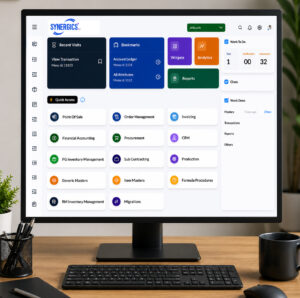
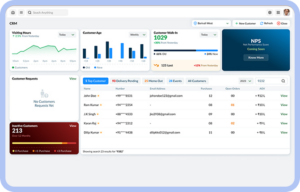
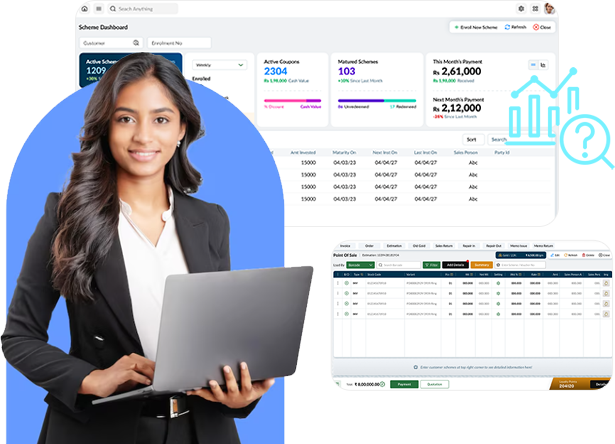
The gap between what generic software offers and what jewellery retail actually requires is not a minor inconvenience. It is a daily source of revenue leakage, inventory discrepancy, and customer service failure that compounds over time. Jewellery retail involves simultaneous tracking of multiple metal types, purity grades, stone categories, making charges, wastage calculations, karigar job work, and scheme management, none of which a standard retail or accounting platform handles with any reliability. Synergics Jewellery ERP is built specifically for this complexity—a purpose-built jewellery software that manages every facet of jewellery retail, from multi-metal inventory and karigar job work to wastage tracking and customer schemes. Businesses that have made the switch to Synergics Jewellery ERP report measurable improvements in stock accuracy, billing speed, and customer retention within the first quarter of implementation.
Why Generic Software Fails Jewellery Retailers Specifically
The jewellery business is not a standard retail business with a specialised product. It is a fundamentally different operational environment that requires software built around its specific logic from the ground up.
Consider what a single transaction at a jewellery counter involves: the current gold rate for the day, the purity of the specific piece, the making charge structure (which may vary by item type, design, or customer), wastage percentage, stone value calculated separately by weight and quality, applicable GST at the correct rate for each component, and the customer’s scheme balance if they are enrolled in a gold saving plan. A generic billing system handles none of this natively. Every workaround a retailer builds to manage these requirements in generic software is a source of error, delay, and staff training overhead.
The categories where purpose-built jewellery software delivers the most significant operational improvement break down clearly by metal and product type. Each category has its own pricing logic, inventory structure, and compliance requirements that purpose-built software handles as standard rather than as a customisation. Synergics Jewellery ERP is designed to address this complexity head-on, offering a purpose-built jewellery software that treats gold, silver, diamond, and studded jewellery categories with their unique workflows, GST rates, and making charge structures as standard features—not afterthoughts. With Synergics Jewellery ERP, businesses no longer need to force-fit their operations into generic templates; instead, they get a system that adapts to how they actually run their jewellery business.
Jewelry Software: The Foundation Every Retailer Needs
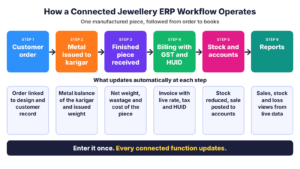
Jewelry software in the context of Indian retail means a platform built to manage the full operational lifecycle of a jewellery business: purchasing from manufacturers and karigar suppliers, inventory management by weight and piece count, customer billing with dynamic pricing, scheme management, repair and job work tracking, and financial reporting that integrates metal rate movements with profit calculations.
The features that most retailers discover they needed only after experiencing their absence include:
- Live gold and silver rate integration that updates billing automatically without manual rate entry at the start of each trading day
- Multi-branch inventory visibility that shows stock across all locations in real time rather than requiring physical counts or inter-branch phone calls
- Karigar management that tracks job work issued, received, and pending with weight reconciliation at each stage
- Hallmarking compliance documentation that generates BIS-required records automatically at the point of sale
- Customer loyalty and scheme management that tracks gold saving scheme instalments, maturity dates, and redemption eligibility without manual spreadsheet maintenance
The retailers who underestimate these requirements typically discover the cost of the gap during peak periods like Dhanteras, Akshaya Tritiya, and wedding season, when transaction volumes spike and manual processes break down under pressure.
Diamond Software: Where Pricing Complexity Demands Specialisation
Diamond inventory and billing is where generic software fails most visibly and most expensively. Diamond pricing is not weight-based in the straightforward way that gold pricing is. It is determined by the combination of carat weight, cut grade, colour grade, clarity grade, and certificate source, and the interaction of these variables produces price points that cannot be captured in a standard product catalogue.
Purpose-built diamond software handles the following as standard features rather than customisations:
| Feature | Why It Matters |
|---|---|
| 4C-based inventory cataloguing | Every stone is uniquely identified by its quality parameters, not just its weight |
| Certificate tracking | GIA, IGI, and HRD certificate numbers linked to specific stones in inventory |
| Memo and consignment management | Diamonds received on approval from suppliers tracked separately from owned inventory |
| Stone-level profitability reporting | Margin analysis by quality tier rather than only by product category |
| Loose diamond and studded jewellery integration | Stones tracked through setting process from loose inventory to finished piece |
For retailers with significant diamond inventory, the difference between purpose-built diamond software and a generic system is the difference between knowing exactly what you have and guessing. Inventory discrepancies in diamond stock are financially consequential in ways that errors in gold weight inventory simply are not, because individual stones carry values that can range from hundreds to lakhs of rupees.
Gold Software: Managing India’s Most Traded Precious Metal
Gold is the core of Indian jewellery retail, and gold software needs to handle the specific operational realities of gold trading at a level of precision that directly affects profitability. The daily gold rate is the most fundamental variable in the business, and every transaction, valuation, and stock reconciliation depends on it being captured accurately and applied consistently.
What most retailers miss about gold software requirements:
- Rate lock functionality: The ability to lock a gold rate for a specific transaction or customer order at the time of booking rather than at the time of delivery, with the difference tracked and managed systematically
- Old gold purchase management: Buying back old jewellery from customers involves purity testing, weight recording, melting loss estimation, and pricing at a different rate from new gold sales. Generic systems have no workflow for this
- Making charge flexibility: Making charges in Indian jewellery retail vary by item type, design category, wholesaler versus retail customer, and often by individual negotiation. Gold software needs to support multiple making charge structures simultaneously without requiring manual override at each transaction
- Gold loan integration: Many jewellery retailers offer gold loan services. Purpose-built gold software integrates loan management with inventory tracking so that pledged gold is correctly segregated from available stock
The daily stock reconciliation requirement alone, matching physical gold weight against system records at the close of each trading day, is a process that generic software cannot support reliably because it does not understand the weight-based logic of gold inventory management.
Gemstone Software: Complexity That Most Systems Cannot Handle
Gemstone inventory management is the most complex category in jewellery retail software because gemstones are the most varied category by every measure: type, origin, treatment status, certification, weight unit (carats for most stones, ratti for some traditional categories), and pricing methodology all differ by stone type and quality tier.
A retailer carrying ruby, emerald, sapphire, and semi-precious stone inventory is effectively managing four completely different pricing and cataloguing systems within a single inventory. Purpose-built gemstone software handles this through configurable stone type masters that allow each category to carry its own pricing logic, unit of measurement, and quality grading framework.
Critical gemstone software features that retailers consistently undervalue until they experience their absence:
- Treatment disclosure tracking for compliance with consumer protection requirements
- Origin certification management for high-value coloured stones
- Stone-to-setting workflow that tracks individual gemstones through the jewellery manufacturing process
- Consignment stock management for stones received from gem dealers on approval
- Valuation certificate generation for insurance and resale purposes
Retailers who manage gemstone inventory in a generic system typically maintain parallel spreadsheets for the detail that the software cannot capture. This dual-record approach is both inefficient and unreliable, with discrepancies between the system and the spreadsheet being discovered only during physical audits.
Silver Software: The Underserved Category in Indian Retail
Silver retail has grown significantly in India across gifting, home decor, pooja items, and fashion jewellery categories, and it presents its own software requirements that differ from gold in ways that many retailers do not anticipate until they are managing the inventory.
Silver items are typically higher in piece count and lower in per-piece value than gold, which means the inventory management challenge is volume rather than value. Silver software needs to handle large catalogue sizes efficiently, manage making charges across a wide range of item types and price points, and support the GST structure for silver items which differs from gold.
Silver-specific software requirements that most generic systems miss:
- High-volume catalogue management with image-based item identification
- Weight-based and piece-based billing flexibility within the same transaction
- Silver gifting and packaging add-on billing that integrates with the main item sale
- Festival and seasonal demand forecasting that helps with purchasing decisions ahead of peak gifting periods
- Return and exchange management for silver gifts, which have a higher return rate than gold jewellery
What to Look for When Evaluating Jewellery Software in 2026
The jewellery software market in India has matured significantly, and retailers evaluating platforms need to assess capability across a specific checklist rather than relying on general feature lists or vendor demonstrations that show only the most favourable workflows.
Evaluation criteria that separate genuinely capable platforms from adequately capable ones:
- Live rate integration with reliable uptime during peak trading periods
- Multi-branch real-time synchronisation without performance degradation
- Karigar and job work module completeness, including weight reconciliation at each job stage
- GST return generation accuracy for the jewellery-specific HSN codes and rate structures
- Scheme management flexibility to handle the variety of gold saving scheme structures used across different regional markets
- Repair and alteration job tracking with customer communication integration
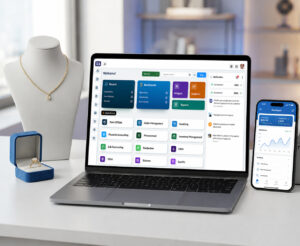
- Mobile access for owners and managers who need visibility without being physically present at the counter
The implementation support and training quality offered by the software vendor matters as much as the software capability itself. A platform with all the right features that is configured incorrectly or that staff cannot use confidently delivers poor results regardless of its technical quality.
FAQ
What is the difference between jewellery software and standard retail software? Standard retail software manages products at a fixed price with standard tax treatment. Jewellery software manages items priced dynamically based on daily metal rates, purity, making charges, and stone values simultaneously. It also handles weight-based inventory, karigar job work, hallmarking compliance, gold saving schemes, and old gold purchase workflows that standard retail platforms have no framework for managing.
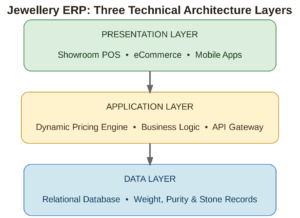
Is cloud-based jewellery software better than on-premise software for Indian retailers? Cloud-based jewellery software offers advantages in multi-branch synchronisation, remote access, automatic updates, and reduced IT infrastructure cost. On-premise software offers advantages in internet-independent operation and data control, which matters for retailers in locations with unreliable connectivity. The right choice depends on the retailer’s branch structure, internet reliability, and IT management capability. Many retailers in 2026 are choosing hybrid architectures that operate locally with cloud synchronisation.
How long does it take to implement jewellery software in an existing business? Implementation timelines vary by business size and complexity. A single-branch retailer with a clean inventory record can typically go live within two to four weeks. Multi-branch implementations with large existing inventory datasets and complex karigar supplier networks typically require six to twelve weeks for full implementation including data migration, staff training, and parallel running periods.
What should a jewellery retailer do before switching software? Complete a full physical inventory count and reconcile it against current records before migrating to new software. Clean up duplicate customer records, outstanding scheme balances, and pending job work records in the existing system. Define the making charge structures, rate rounding rules, and GST configurations required before beginning implementation, as these decisions affect how the entire system is configured.
How does jewellery software handle GST compliance for mixed transactions involving gold, diamonds, and gemstones? Purpose-built jewellery software applies the correct GST rate to each component of a mixed transaction automatically: 3 percent on gold value, 1.5 percent on diamond value when sold as part of studded jewellery, and the appropriate rate for each gemstone category. It generates itemised GST invoices that meet the requirements of both B2C and B2B transactions and produces the data required for GSTR-1 and GSTR-3B filing in a format compatible with the GST portal.
Can jewellery software integrate with e-commerce platforms for online sales? Leading jewellery software platforms in 2026 offer integration with major e-commerce platforms and marketplaces. The key integration requirements are real-time price synchronisation so that online prices reflect current gold rates, inventory synchronisation to prevent overselling, and order management that connects online transactions to the same fulfilment and invoicing workflow as in-store sales.
What is the typical cost of jewellery software for an Indian retailer? Jewellery software pricing in India varies significantly by platform, deployment model, and feature set. Entry-level single-branch solutions are available from approximately INR 15,000 to INR 40,000 per year for cloud-based subscriptions. Mid-tier platforms with full karigar management, multi-branch support, and scheme management typically range from INR 50,000 to INR 1,50,000 per year. Enterprise platforms for large multi-branch retailers with advanced analytics and e-commerce integration are priced higher and typically quoted on a per-branch or per-user basis following a needs assessment.
How do I know if my current software is causing inventory loss in my jewellery business? The most reliable indicators of software-driven inventory loss are consistent discrepancies between physical gold weight counts and system records, making charge calculations that staff override manually on a regular basis, karigar job work reconciliation that requires manual cross-referencing of physical registers, and scheme maturity calculations that produce disputes with customers. If any of these are regular occurrences in your business, the software is not fit for purpose and the cost of switching is almost certainly lower than the ongoing cost of the discrepancies it is producing.