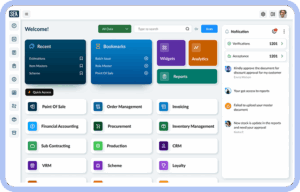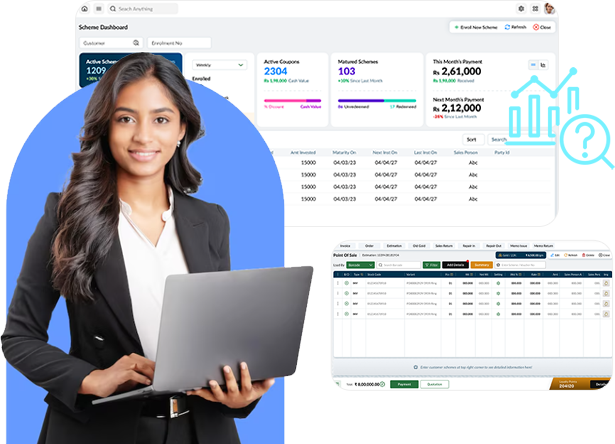
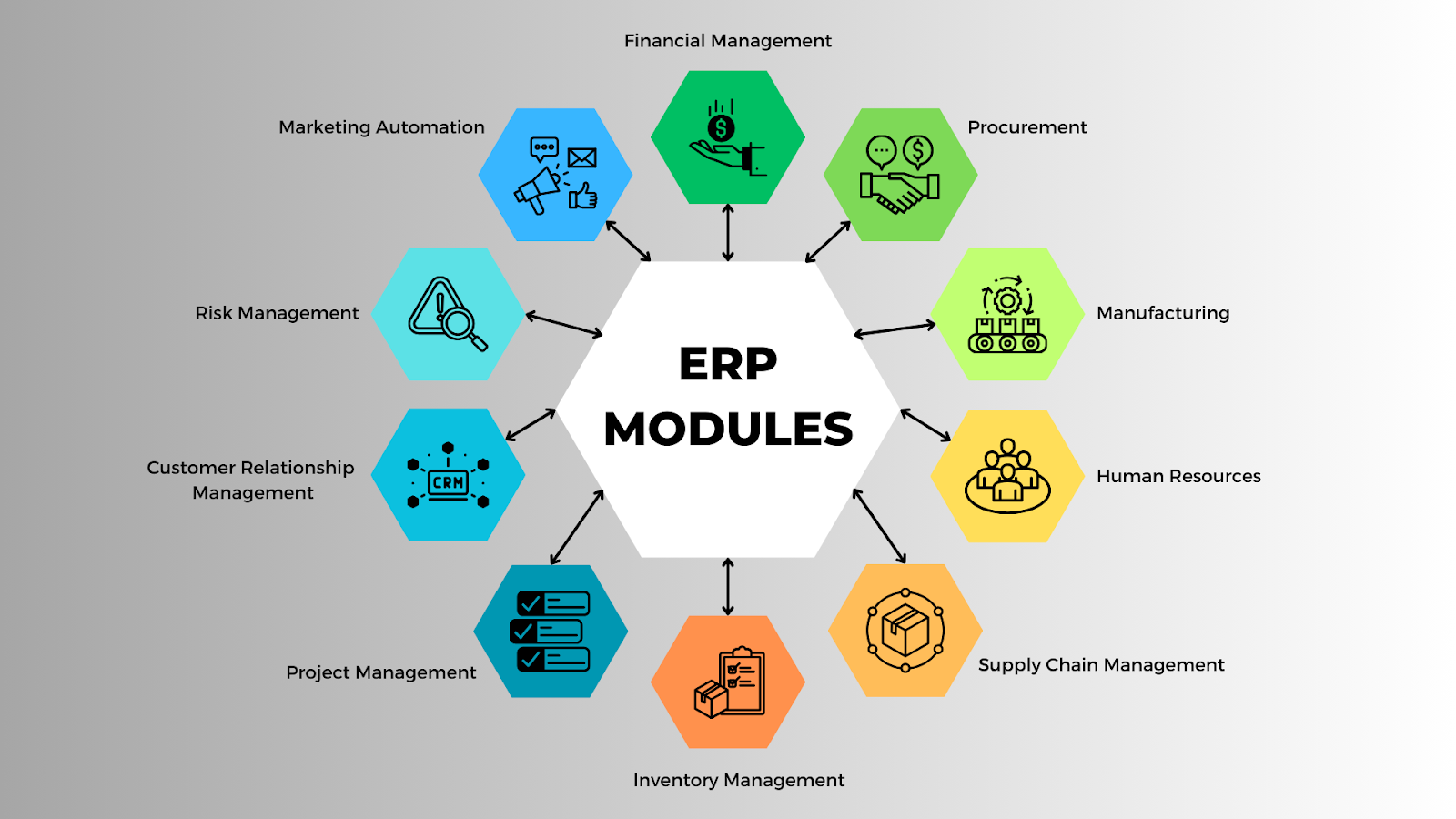
- A modern jewellery ERP connects inventory, billing, CRM, manufacturing, and compliance in one system.
- Fifteen core features matter most, from centralised inventory to regulatory compliance.
- These features apply across retail, wholesale, and manufacturing, though each business type uses them differently.
- Synergics Jewellery ERP builds every one of these features specifically for the jewellery trade, not adapted from generic software.
Jewellery businesses run on precision. Every gram matters. Every transaction needs to be accurate. A strong technological foundation isn’t optional anymore. It’s the backbone of daily operations.
This guide covers the fifteen features that matter most in a modern jewellery ERP. Whether you run a boutique, a wholesale operation, or a manufacturing unit, these are the capabilities worth evaluating closely.
Top Features of a Modern Jewellery ERP System at a Glance
| Feature | What It Does | Who Benefits Most |
| Centralised Inventory Management | Tracks stock in real time across all locations using barcode and RFID | Retailers, Wholesalers, Manufacturers |
| Automated Billing and Invoicing | Handles making charges, GST, VAT, split payments, and discounts automatically | Retailers, Wholesalers |
| Customer Relationship Management | Stores purchase history, birthdays, preferences, and enables loyalty programs | Retailers |
| Integrated POS | Syncs sales, inventory, and customer data in real time at the point of sale | Retailers, Multi-location Chains |
| Manufacturing Module | Manages job work, BOM, wastage tracking, and gold weight through production | Manufacturers |
| Barcoding and Tagging | Enables quick identification, scanning, and movement tracking of every piece | Retailers, Manufacturers |
| Real-Time Analytics and Reporting | Generates sales, inventory, margin, and customer trend reports on demand | All Business Types |
| Supplier and Purchase Management | Manages vendor ratings, purchase orders, material inward, and wastage recording | Wholesalers, Manufacturers |
| Multi-Currency and Multi-Language | Supports international transactions with live exchange rate integration | Global Businesses |
| E-commerce Integration | Syncs inventory and orders with Shopify, WooCommerce, and Magento in real time | Retailers with Online Stores |
| Role-Based Access Control | Restricts system access by staff role to protect sensitive business data | All Business Types |
| Financial Management and Accounting | Covers ledgers, P and L, bank reconciliation, and GST return reports | All Business Types |
| Loyalty and Rewards Management | Automates point awards, tier management, and customer reward reminders | Retailers |
| Mobile and Cloud Accessibility | Provides 24/7 access, automatic backups, and remote management via app | All Business Types |
| Regulatory Compliance | Supports BIS hallmarking, tax compliance, and automated audit reporting | All Business Types |
1. Centralised Inventory Management
Inventory is the lifeline of any jewellery business. A modern ERP tracks stock across every location in real time. This includes:
- Barcode and RFID-based tracking
- Real-time stock updates
- Automatic reorder alerts
- Categorisation by type, karat, design, and size
Centralised inventory means you never lose sight of what you own. It also cuts losses from misplacement or theft.
2. Automated Billing and Invoicing
Jewellery transactions involve complex pricing. Hallmarking, making charges, and tax all factor into a single sale. A strong ERP handles:
- Custom pricing
- Split payments (cash, card, EMI, etc.)
- GST/VAT calculations
- Discounts and promotional offers
This builds customer trust through transparent pricing. It also makes accounting far easier for your team.
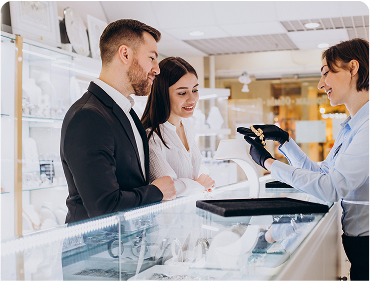
3. Customer Relationship Management (CRM)
A good CRM module helps you understand your customers. It stores:
- Purchase history
- Birthdays and anniversaries
- Preferred styles and budgets
- Feedback and reviews
This data powers targeted campaigns and loyalty programs. It’s what turns a single sale into a long-term relationship. For a deeper look at this specific capability, see our complete guide to jewellery CRM software.
4. Integrated Point of Sale (POS)
A modern ERP connects directly to in-store and online POS. Sales, inventory, and customer records sync in real time. Key capabilities include:
- Quick billing
- Real-time inventory deductions
- Instant customer look-up
- Multi-location billing support
Faster service means shorter queues and happier customers. See our complete guide to jewellery POS software for more detail.
5. Jewellery Manufacturing Module
Manufacturers need dedicated production tools. This module covers:
- Job work management
- Wastage tracking
- Casting and finishing status
- Bill of Materials (BOM) management
- Gold/silver weight tracking
Every component gets tracked from raw material to finished product. That visibility reduces wastage and protects margin.
6. Barcoding and Tagging
Barcoding makes identification fast. Every tag can carry the product code, karat value, weight, and price. Scanning replaces manual counting, especially during audits or rush hours. For the full picture on this capability, see our guide to jewellery barcode software.

7. Real-Time Analytics and Reporting
Good decisions need good data. A capable ERP reports on:
- Daily/weekly/monthly sales
- Inventory turnover
- Profit margins
- Customer buying trends
These reports surface your best sellers and your slow-moving stock. They also reveal which customer segments actually drive profit. Our complete guide to jewellery analytics software covers this in depth.
8. Supplier and Purchase Management
Strong vendor relationships protect quality and cost. The system should support:
- Vendor rating
- Purchase order generation
- Material inward tracking
- Wastage recording
This keeps the right materials arriving from the right vendors, at the right time.
9. Multi-Currency and Multi-Language Support
International business needs international tools. Look for:
- Multi-currency transactions
- Live exchange rate integration
- Language translation support
This keeps the experience smooth for both staff and customers, wherever they’re based.
10. E-commerce Integration
Online shopping isn’t optional anymore. Integration with platforms like Shopify and WooCommerce brings:
- Real-time inventory sync
- Unified customer profiles
- Streamlined online order management
- Less manual data entry
One dashboard now manages both your storefront and your website.
11. Role-Based Access Control
Security matters in jewellery retail. Role-based access keeps data protected:
- Sales staff access customer data and POS
- Admins manage inventory and reports
- Finance staff access billing and ledgers
This structure protects sensitive information and keeps accountability clear.

12. Financial Management and Accounting
A built-in accounting module removes the need for separate software. It covers:
- Ledger entries
- Trial balance and P&L statements
- Bank reconciliation
- GST return reports
This keeps your business compliant without relying on external tools.
13. Loyalty and Rewards Program Management
Repeat customers deserve recognition. A capable ERP lets you:
- Award points on every purchase
- Build tiered reward levels
- Sending reminders for unused points
This increases customer engagement and promotes long-term loyalty.
14. Mobile and Cloud Accessibility
Cloud-based ERP systems ensure that you can access your business data on-the-go. Whether you’re travelling or managing multiple outlets remotely, cloud ERP offers:
- 24/7 access from anywhere
- Automatic data backup and recovery
- App-based management
- Stronger security than most on-premise setups
This matters most for owners who need real-time visibility while away from the store. Our complete guide to cloud-based jewellery ERP breaks this down further.
15. Regulatory Compliance
Jewellery businesses face strict rules. A robust ERP handles:
- BIS hallmarking and HUID integration
- Tax and GST compliance
- Automated audit reporting
Staying compliant avoids legal trouble. It also builds real trust with customers. See our guides to HUID tracking and BIS hallmarking software for the full detail.
Want the Full Retail, Wholesale, and Manufacturing Breakdown?
These fifteen features apply broadly, but they don’t work identically everywhere. A retailer uses CRM very differently from a manufacturer. A wholesaler prices very differently from a retail counter.
For a complete side-by-side comparison of how every feature plays out across retail, wholesale, and manufacturing, see our full jewellery ERP modules breakdown. It includes a complete feature matrix mapping each capability to every business type.
Why Choose an ERP Built for Jewellery
Generic ERP software wasn’t built for this trade. It doesn’t understand karat purity, making charges, or gold rate fluctuations natively. A jewellery-specific system aligns with these realities from the ground up.
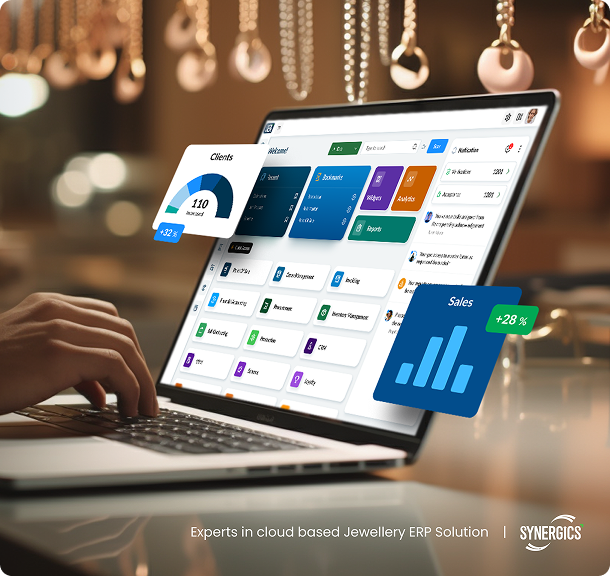
From precious metals to online orders, a purpose-built jewellery ERP handles the full picture in one place.
Conclusion
A feature-rich, jewellery-specific ERP is a genuine investment in your business’s future. It helps you scale, stay compliant, and compete in a crowded market. The right system turns fifteen separate capabilities into one connected way of working.
Want to see these features working together for your specific business? Book a free demo with the Synergics team.
Frequently Asked Questions
1. What is a jewellery ERP system?
A jewellery ERP system connects inventory, billing, CRM, POS, manufacturing, and compliance into one platform. It’s built specifically for jewellery retailers, wholesalers, and manufacturers, not adapted from generic business software. That focus is what makes it handle karat purity and gold rates correctly.
2. What is the most important feature of a jewellery ERP?
Centralised inventory management is usually the most critical feature. It gives real-time stock visibility across every location, using RFID and barcode tracking, so every piece stays accounted for at all times. Without it, every other feature runs on inaccurate data.
3. How does jewellery ERP handle gold pricing and tax?
The system applies making charges, karat-based gold valuations, and GST calculations automatically to every transaction. Discount structures apply the same way, without any manual calculation required from staff. This removes a major source of billing errors at the counter.
4. Can one jewellery ERP manage both retail and manufacturing?
Yes. A complete system includes a dedicated manufacturing module covering job work, Bill of Materials, and wastage tracking. It runs alongside full retail operations in the same platform, so stock and sales data stay perfectly connected, always.
5. What does CRM do in a jewellery ERP system?
CRM stores purchase history, birthdays, anniversaries, and style preferences. This data enables targeted marketing, loyalty programs, and the kind of personalised service that drives repeat purchases. It turns a single sale into an ongoing, lasting relationship.
6. How does jewellery ERP support multiple store locations?
It provides real-time stock visibility across every location. The system manages inter-location transfers, consolidates reporting, and applies role-based access control separately at each store. Owners get one consolidated view instead of five separate, disconnected ones.
7. Does jewellery ERP integrate with e-commerce platforms?
Yes. Most modern systems integrate with Shopify, WooCommerce, and Magento. Inventory syncs in real time, and customer profiles stay unified across physical and online stores. This prevents overselling on items that just sold in person, moments earlier.
8. What compliance features does jewellery ERP include?
It supports BIS hallmarking, automated GST return preparation, and tax-compliant invoicing. Ledger management, trial balance, and bank reconciliation are typically built into the same platform. This removes the need for a separate accounting tool entirely, saving real time.
9. Is cloud-based jewellery ERP secure?
Yes. Cloud ERP uses role-based access control, data encryption, and automatic backups. These standards are often stronger than what most on-premise server setups actually maintain. Regular security audits add another layer of protection on top of that.
10. How do loyalty programs work in a jewellery ERP?
The system awards points automatically on every purchase. It tracks balances by customer, manages reward tiers, and sends automated reminders, all from the same platform used for daily transactions. No separate loyalty app or spreadsheet is needed at all.