- Bullion management software is built for trading physical gold, silver, and other precious metals as a commodity, not for retailing finished jewellery.
- Core features include live spot pricing, hedging and position-keeping, party-wise transaction ledgers, and scrap refining workflows.
- Bullion trading software and jewellery ERP solve genuinely different problems, though some capabilities overlap for businesses that do both.
- Jewellery businesses handling gold and silver as part of retail, exchange, or lending should look at what their jewellery ERP already offers before evaluating separate bullion software.
What Is Bullion Management Software?

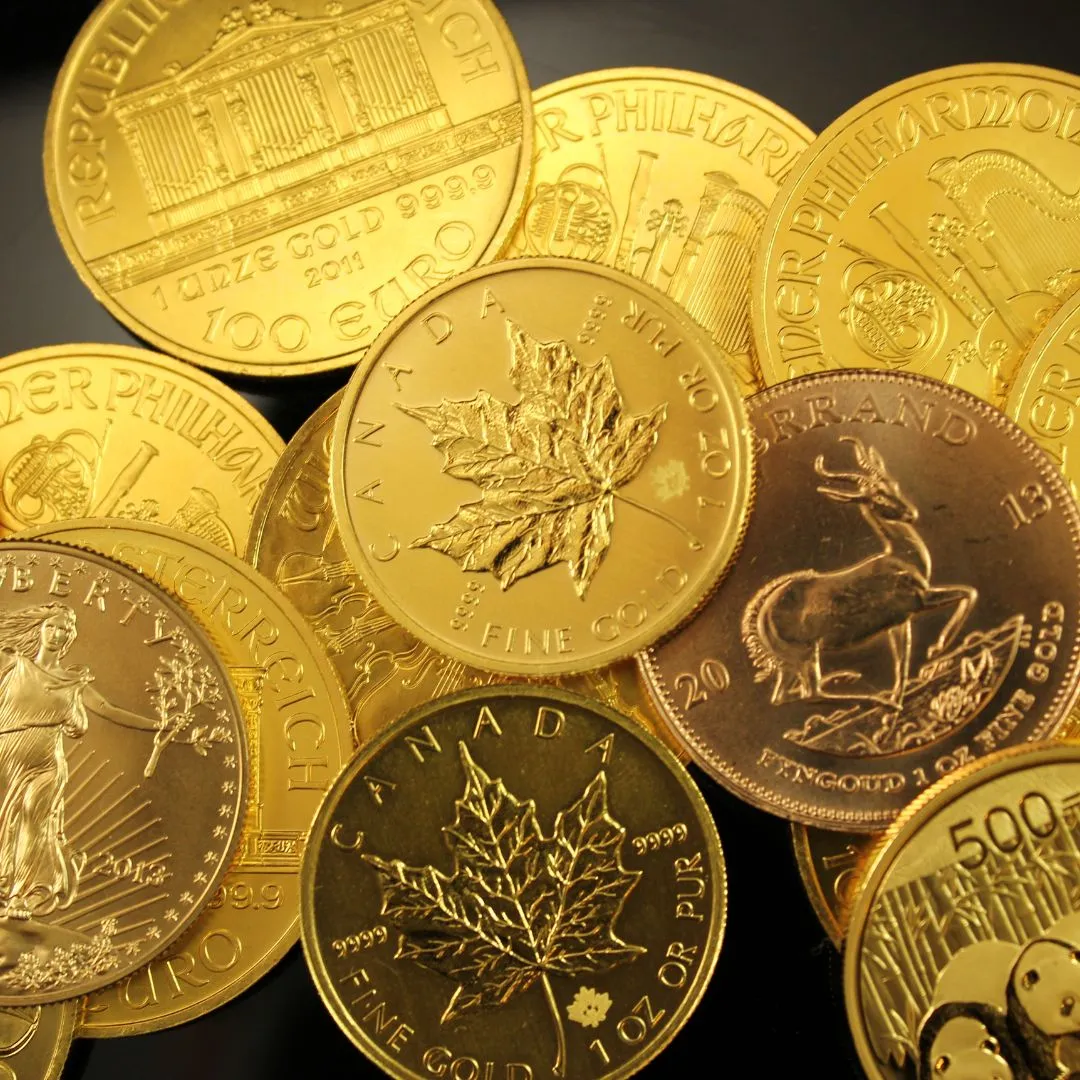
Bullion management software is built for businesses that trade physical gold, silver, and other precious metals as a commodity, in bar or coin form. It’s used by bullion dealers, refiners, and coin traders, not primarily by jewellery retailers selling finished pieces.
The core job of this software is tracking metal as an asset. That means what’s held, what’s been traded, at what price, and what risk exposure that creates. This is a fundamentally different problem from tracking finished jewellery inventory by design and craftsmanship.
What Are the Core Features of Bullion Management Software?
Bullion management software typically centers on four capabilities: live spot pricing, hedging and position-keeping, party-wise transaction ledgers, and scrap or refining workflows. Compliance and reporting round out most platforms too. Together, these tools track metal as a traded asset, not as a component of a finished product.
- Live spot pricing, syncing gold and silver prices from domestic and international markets in real time.
- Hedging and position-keeping, tracking a trader’s exposure and helping manage risk as prices move.
- Party-wise transaction ledgers, recording every buy and sell against a specific trading partner.
- Scrap and refining workflows, managing metal that gets melted down and reprocessed.
- Compliance and reporting, covering GST, audit trails, and trade documentation.
How Does Live Spot Pricing Work in Bullion Software?
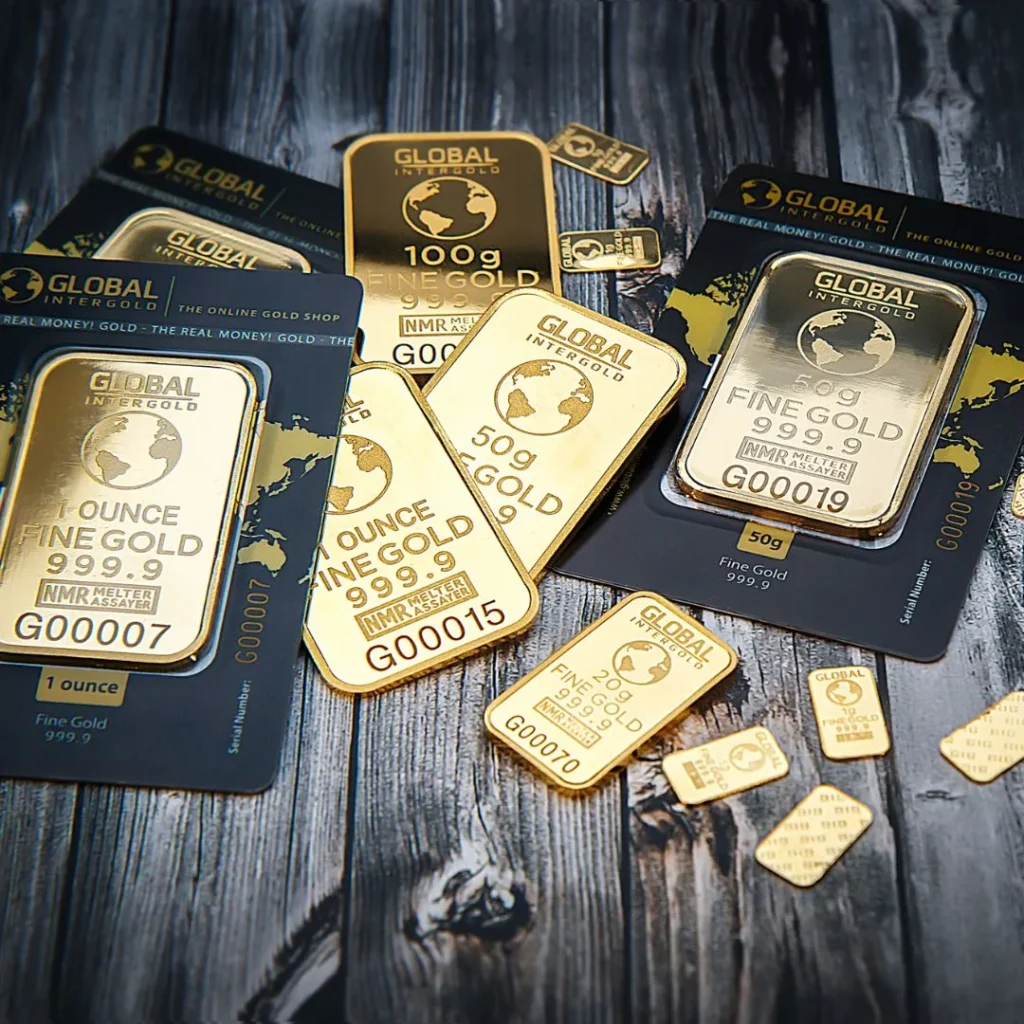
Live spot pricing pulls gold and silver rates from domestic and international markets continuously. Bullion trading margins depend on catching favorable price movements as they happen. A trader working from a rate that’s even a few minutes old can lose real money on a large transaction.
Most bullion platforms push these updates through the trading desk automatically. Push, SMS, or email alerts often fire when prices cross a set threshold.
What Is Hedging and Position-Keeping in Bullion Trading?
Hedging means taking an offsetting position to manage price risk. It applies to metal a trader is holding, or has already committed to buy or sell. Position-keeping is the ongoing record of exactly what that trader’s current exposure looks like, across every open trade.
This matters because bullion trading is directly exposed to commodity price risk on inventory itself. Jewellery retail isn’t, it’s mostly exposed to demand for finished pieces instead.
What Is Party-Wise Transaction Management?
Party-wise transaction management tracks every trade against the specific counterparty involved, another dealer, a bank, or a wholesale buyer. It’s not treated as an anonymous sale. This creates a running ledger of exactly how much metal or money is owed between two parties at any point.
For a bullion trading business, this ledger is often as important as the inventory record itself. Large trades frequently settle over time, not instantly.
How Does Bullion Software Handle Scrap and Refining?
Bullion software tracks scrap metal from the point it’s received through the refining process, until it re-enters inventory as usable, standard-purity metal. This includes recording the original weight and estimated purity, then reconciling that against what actually comes back from the refiner.
This workflow exists in jewellery businesses too, but usually at a smaller scale. It’s tied to a specific piece or job, not a dedicated commodity refining operation.
Is Bullion Management Software the Same as Jewellery ERP?
No, they solve different core problems, even though both deal with gold and silver. Bullion software is built around commodity trading risk and metal-as-asset tracking. Jewellery ERP is built around finished product creation, retail sale, and customer relationships.
Some jewellery businesses, particularly sarafa-style operations that combine retail with gold lending and exchange, need capabilities from both worlds. That’s a real, specific case, not the general rule.
Bullion Trading Software vs. Jewellery ERP: A Quick Comparison
The two categories overlap on live pricing but diverge everywhere else. Bullion software is built around trading risk and commodity ledgers, while jewellery ERP is built around finished products, retail, and customer relationships. The table below breaks down exactly where each one covers you, and where it doesn’t.
| Capability | Bullion Trading Software | Jewellery ERP |
| Live spot/rate pricing | Yes, core function | Yes, for billing and valuation |
| Hedging and position-keeping | Yes, core function | Not typically included |
| Party-wise bullion trade ledger | Yes, core function | Not typically included |
| Scrap and refining workflow | Yes, dedicated module | Limited, tied to specific jobs |
| Finished jewellery inventory by design | No | Yes, core function |
| Karigar and job work tracking | No | Yes, core function |
| Retail POS and billing | Limited or none | Yes, core function |
| GST and hallmarking compliance | Trade-focused compliance only | Full retail and manufacturing compliance |
| Customer CRM and loyalty schemes | No | Yes, core function |
| Gold savings scheme management | No | Yes, in jewellery-specific platforms |
Who Actually Needs Bullion Management Software?
Bullion management software fits pure bullion dealers, refiners, and coin traders. Their business is buying and selling metal itself, not making or selling jewellery. If your revenue comes primarily from trading margins on bars and coins, this is likely the right category to evaluate.
Jewellery retailers, manufacturers, and wholesalers are usually better served by a jewellery-specific ERP instead. That includes sarafa businesses handling gold exchange and lending. A jewellery ERP with live metal rates fits better than a standalone bullion trading platform built for an entirely different business model.
What Should a Bullion Business Look for When Choosing Software?
A bullion-focused business should prioritize real-time spot pricing accuracy first. Genuine hedging tools and party-wise ledger depth matter too, since these directly protect margin. Compliance reporting and refining workflow support matter too, but they’re secondary to getting the trading and risk tools right first.
What Does Synergics Jewellery ERP Offer for Businesses Handling Gold and Silver?
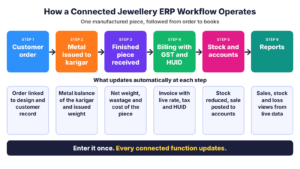
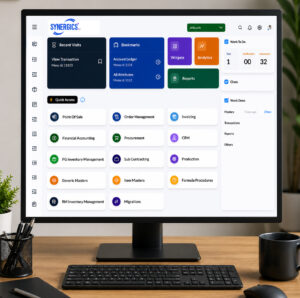
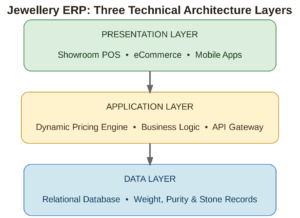
Synergics Jewellery ERP is built for jewellery retailers, wholesalers, and manufacturers, not as standalone bullion trading software. For jewellery businesses that also handle gold and silver as part of retail, exchange, or lending, several existing capabilities are directly relevant.
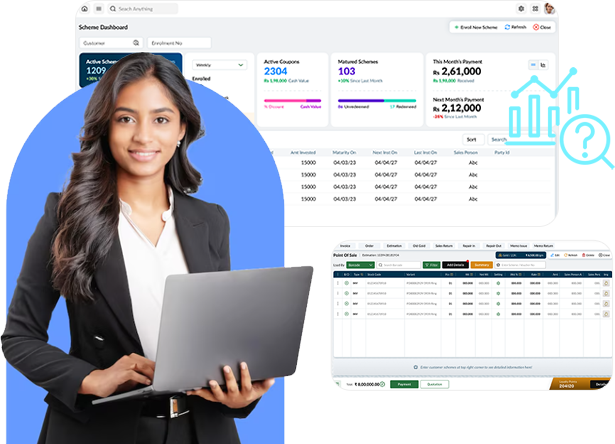
Live gold and silver rate integration keeps pricing and billing accurate as the market moves throughout the day. Metal accounting tracks precious metal as it moves through procurement, manufacturing, and sales. Gold savings scheme management handles customer instalments, maturity, and redemption. For sarafa-style businesses specifically, our guide to sarafa software covers girvi pledges, udhar credit accounts, and gold exchange in detail. That’s ground a general jewellery ERP doesn’t typically cover.
Choosing Between Bullion Software and Jewellery ERP
The right choice depends on what your business actually does, not just what metals pass through it. A pure bullion trading desk needs hedging and position-keeping tools a jewellery ERP was never built for. A jewellery retailer, manufacturer, or sarafa business needs finished-piece tracking, karigar management, and customer relationships that bullion software doesn’t cover at all.
If your business handles bullion trading, sarafa-style lending, or gold exchange as part of a broader jewellery operation, talk to the Synergics team about your specific requirements. We can walk through which capabilities genuinely fit your business, rather than assuming one category covers everything.
Get in touch to discuss how your business actually handles gold and silver, and what fits.
FAQs
1. What is bullion management software?
Bullion management software is built for trading physical gold, silver, and other precious metals as a commodity. It’s typically used by bullion dealers, refiners, and coin traders. It focuses on spot pricing, hedging, and trade ledgers, not finished jewellery retail.
2. What’s the difference between bullion software and jewellery ERP?
Bullion software centers on commodity trading risk, hedging, and metal-as-asset tracking. Jewellery ERP centers on finished product creation, retail sale, and customer relationships. Some businesses need elements of both, but they solve different core problems.
3. Does jewellery ERP include live gold and silver rates?
Yes, most jewellery-specific ERP platforms include live metal rate integration for accurate billing and inventory valuation. This is different from a bullion trading platform’s hedging and position-keeping tools, which jewellery ERP typically doesn’t include.
4. What is party-wise transaction management in bullion trading?
It’s a ledger system that tracks trades against a specific counterparty, another dealer, bank, or wholesale buyer. Each sale isn’t treated as anonymous. This matters since large bullion trades often settle over time rather than instantly.
5. Do sarafa businesses need bullion software or jewellery ERP?
Most sarafa businesses are better served by a jewellery ERP instead. One built to handle gold exchange, pledge lending, and running credit accounts alongside retail sales fits better than a standalone bullion trading platform meant for a different business model.
6. What should a pure bullion trading business prioritize in software?
Real-time spot pricing accuracy, genuine hedging and position-keeping tools, and party-wise ledger depth matter most, since these directly protect trading margin. Compliance reporting and refining workflow support matter too, but come second to the trading tools.
7. Can a jewellery business get bullion-related features from its existing ERP?
Often, yes, to a meaningful extent. Live metal rates, metal accounting, and gold savings scheme management are commonly included in jewellery ERP platforms. True hedging and position-keeping tools are typically not, and require dedicated bullion trading software instead.