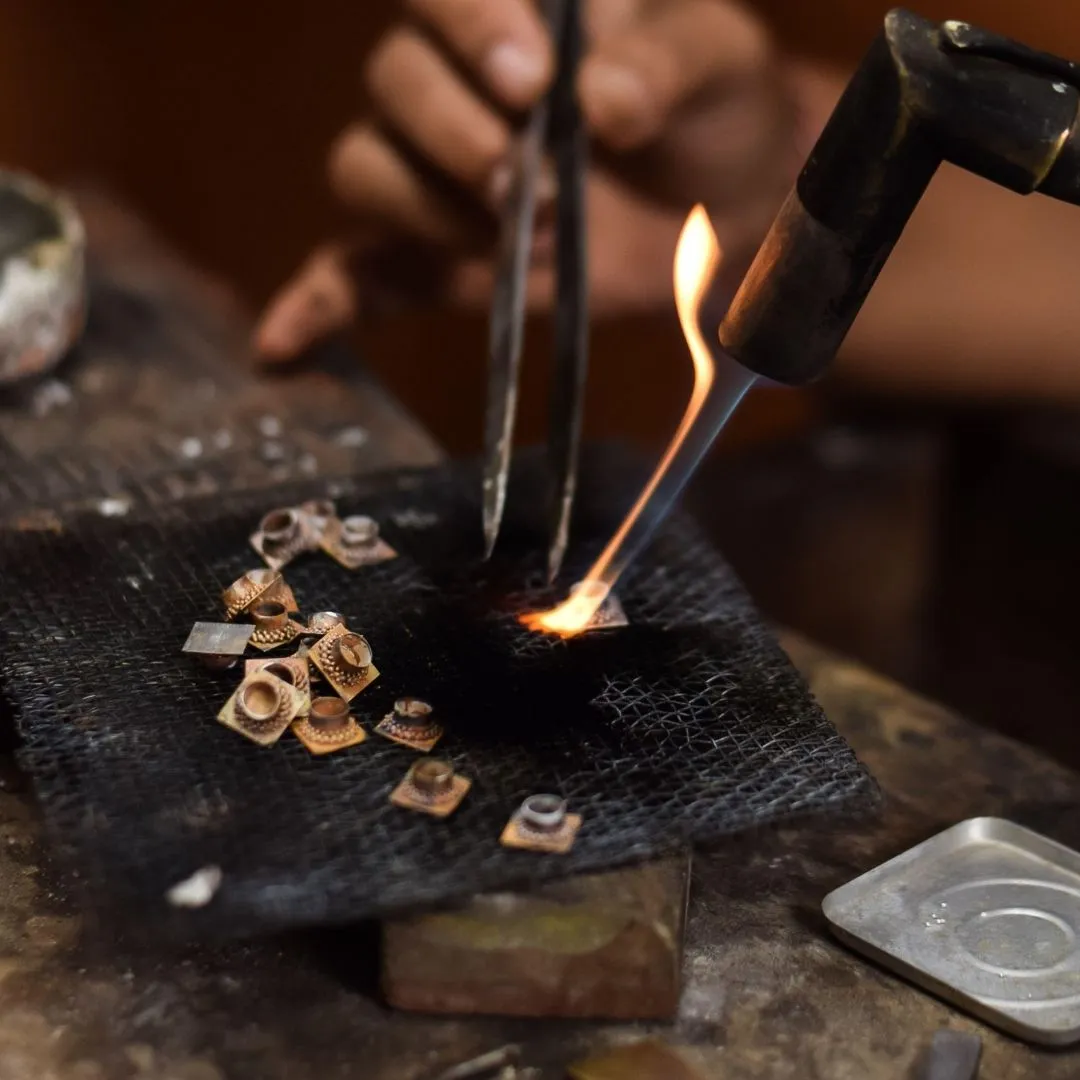
- Wax consumption tracking follows exactly how much wax goes into each mould, tree, and casting batch during production.
- Loss happens at several distinct stages: wax injection, tree assembly, casting, and the final weighing of the casted tree.
- Most workshops track metal loss closely but leave wax consumption largely unmeasured, even though it directly drives casting cost.
- Synergics Jewellery ERP tracks wax alongside metal at every production stage, tying both into the same cost picture.
Why Wax Matters in Jewellery Manufacturing
Casting starts with wax, long before any gold enters the process. A wax model gets created for each design, then multiplied into a tree of identical pieces ready for casting. The metal gets all the attention in most cost discussions. Wax consumption rarely gets the same scrutiny, even though it shapes the entire casting run that follows.
Wax isn’t free, and it isn’t infinite either. Poor tracking here means a workshop loses visibility into a real input cost. It also loses an early warning sign when something in the casting process starts going wrong.
What Is Wax Consumption Tracking?
Wax consumption tracking records how much wax gets used at each stage of production. It ties to a specific design, mould, or job. This includes the wax used for individual models, and the connecting structure, a central wax stem called a sprue, with individual models attached to form a “tree”, that holds multiple models together for casting
Tracked properly, this data links directly to the bill of materials for a given design. Wax usage then becomes part of the same cost calculation as metal and labour, not a separate, unmeasured input.
From Wax Injection to Finished Casting: Where Loss Happens
1. Wax Injection and Mould Creation
A wax injection machine fills a rubber mould with molten wax, producing a wax model of the design. Wax gets consumed here at a fairly predictable rate per mould. That makes this stage a useful baseline for comparison against later stages.
2. Wax Tree Assembly
Individual wax models get attached to a central wax stem, forming a “tree” of pieces ready to be cast together. This stage adds more wax to the total. Tree size directly affects how much metal a single casting run will need.
3. Casting and Burnout
The wax tree gets coated in a plaster-like casting material, then heated until the wax melts away completely, leaving behind an empty cavity in the exact shape of every piece. Molten metal fills that cavity next. This is where wax consumption converts directly into a metal requirement, since a larger, heavier wax tree needs proportionally more metal to fill it.
4. Weighing the Casted Tree
Once cast, the finished tree gets weighed and compared against the metal that was actually issued for the job. This comparison reveals casting loss. Consistent, unexplained gaps here often trace back to wax consumption that was never tracked carefully upstream.
Wax Consumption at a Glance
| Stage | What Happens | What Should Get Tracked |
| Wax injection | Molten wax fills a rubber mould, forming the model | Wax used per mould, as a baseline figure |
| Tree assembly | Individual models attach to a central sprue | Total tree weight, since it drives metal need |
| Casting and burnout | Wax burns out, molten metal fills the cavity | The metal requirement implied by tree size |
| Weighing the cast | Finished tree weighed against issued metal | Actual loss versus what the design should need |
Why Wax and Metal Loss Need to Be Tracked Together
Metal loss tracking alone tells a workshop something went wrong. It doesn’t always explain where. A heavier-than-expected wax tree drives up metal consumption. This looks like production loss, when the real cause sits further back in the process.
Tracking wax and metal together closes that gap. A manager can see whether a specific design consistently uses more wax than expected. They can trace higher metal consumption on that design back to its actual source, rather than treating every casting loss the same way.
What Untracked Wax Consumption Actually Costs a Business
Wax itself is a modest cost individually. The real cost shows up indirectly, through metal. An oversized wax tree, a design that consistently needs more wax than its comparable pieces, or repeated casting attempts due to wax defects, all translate into extra metal consumption. A business absorbs this cost without ever identifying the actual cause.
Over hundreds of casting runs a year, these small, untracked variances add up. A workshop that tracks wax consumption by design and by batch can spot a pattern early. That beats discovering it only as a persistent, unexplained gap in monthly metal reconciliation.
How Synergics Tracks Wax and Casting Data
Synergics Jewellery ERP tracks wax consumption at each production stage, from mould injection through tree assembly to the final casting weight. This data ties directly into the same job card and wastage tracking used for metal. A manager sees the full picture for a design, not just the metal side of it.
Casting loss identified this way feeds into the platform’s broader production loss tracking and benchmarking. A recurring issue on a specific design gets flagged, instead of blending into the workshop’s overall average.
Turning an Invisible Cost Into Something You Can Manage
Wax consumption is easy to overlook, since the material itself costs little on its own. But every gram of wax in an oversized tree becomes a gram of metal a workshop has to account for. Tracking wax alongside metal, at every stage from injection to final weighing, changes that. It turns an invisible cost into something a manufacturing manager can actually see, compare, and act on.
Where is your casting cost actually drifting from what a design should need? Talk to the Synergics team about tracking wax and metal together on your own production floor.
FAQs
1. What is wax consumption tracking in jewellery manufacturing?
It’s the practice of recording how much wax gets used at each stage of casting production, from mould injection through wax tree assembly. This data ties to a specific design or job. Wax usage becomes part of that piece’s actual production cost.
2. Why does wax consumption matter if wax itself is inexpensive?
Wax’s own cost is modest, but it directly determines how much metal a casting run needs. An oversized wax tree means more metal gets consumed to fill it. That’s why wax consumption shows up as a real cost indirectly, through the metal side of production.
3. Where does wax loss typically happen in the casting process?
Loss can occur at several stages. This includes mould injection, assembling the wax tree, the burnout and casting process itself, or defects that require a piece to be recast. Each stage adds its own source of variance.
4. How does casting loss connect back to wax consumption?
When a casted tree gets weighed and compared against issued metal, unexplained gaps often trace back to a wax tree that was oversized or poorly assembled upstream. Tracking both together helps identify whether a loss is a metal-handling issue or a wax-stage issue.
5. Can wax consumption data help with production costing?
Yes. When wax usage ties into a design’s bill of materials, it becomes part of that design’s real production cost, not an unmeasured input. This helps identify which designs consistently run more expensive to cast than expected.